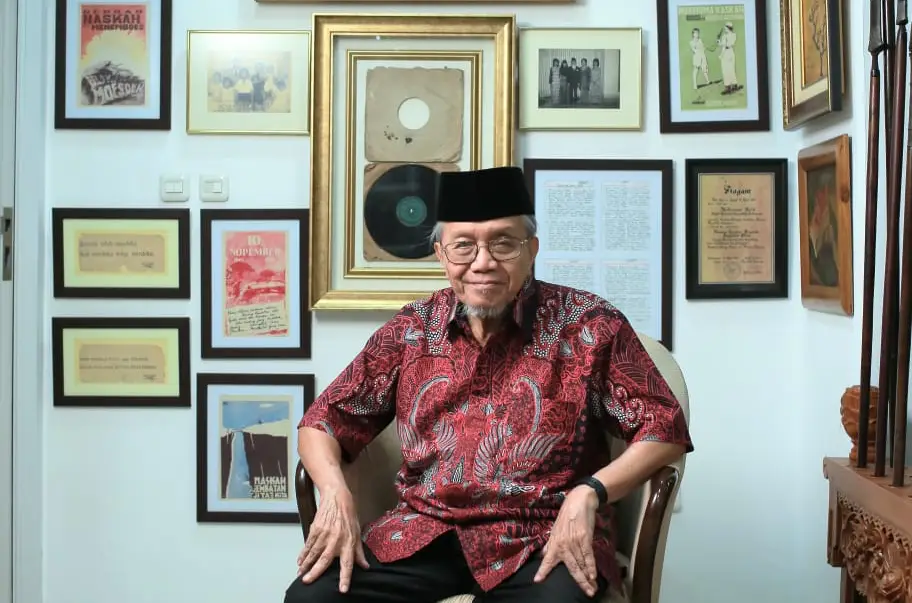
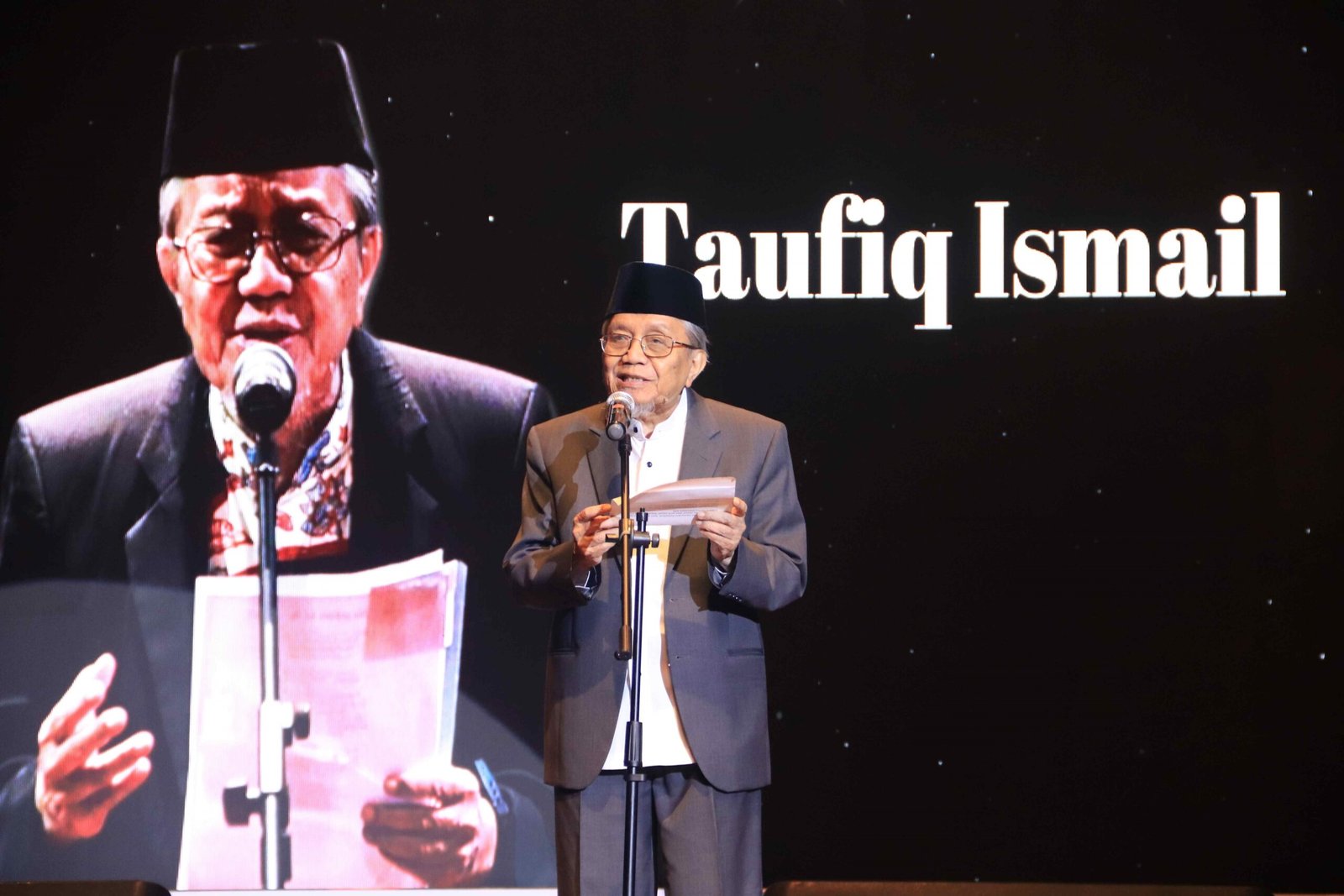
In the landscape of Indonesian literature, few figures stand as firmly, as consistently, and as courageously as Taufiq Ismail. For more than six decades, he has been a poet of conscience — a writer who uses language not merely to describe the world, but to interrogate it. His poems, essays, and cultural work have shaped generations of readers and writers, offering a moral compass during periods of political turbulence, cultural transition, and national selfreflection. To understand Indonesian literature after the mid20th century, one must understand Taufiq Ismail. And to understand Taufiq Ismail, one must begin with the question that defines his legacy: “Why does he matter”?
Taufiq Ismail matters because he represents a rare combination of literary talent, moral courage, and cultural stewardship. Born in Bukittinggi in 1935, he grew up in the rich intellectual environment of Minangkabau society, where oral storytelling, debate, and poetry were woven into daily life. This early exposure shaped his sensitivity to language and his belief that literature is not merely an artistic pursuit, but a social responsibility. When Indonesia entered the era of Guided Democracy under Sukarno, Taufiq became one of the most out-spoken voices resisting the politicization of art. His involvement in the Manifesto Kebudayaan (1963) — a declaration defending artistic freedom — cost him his teaching position, but it cemented his role as a writer who would not compromise truth for comfort.
This moral stance became the foundation of Angkatan ’66, the literary movement he helped shape during Indonesia’s transition to the New Order. While many writers were silenced, intimidated, or coopted, Taufiq continued to write poems that confronted hypocrisy, corruption,and authoritarianism. His work from this period, including Tirani dan Benteng, reflects a poet who understood that literature must speak when others cannot. He wrote with clarity, sharpness, and a sense of urgency that resonated deeply with readers living through political uncertainty.
Yet Taufiq Ismail’s significance extends far beyond political critique. He matters because he has consistently championed humanist values — empathy, integrity, humility, and moral reflection. His famous poem Malu (Aku) Jadi Orang Indonesia is not a condemnation but a plea: a call for citizens to confront their own failures and strive for a more ethical society. His poetry often blends satire with sincerity, reminding readers that self–critique is an essential part of national growth. In this way, Taufiq’s work serves as both mirror and compass, reflecting Indonesia’s struggles while pointing toward its aspirations.
Another reason Taufiq Ismail matters is his lifelong dedication to literary education. As cofounder and longtime editor of Horison, he nurtured countless young writers, offering a platform for voices that might otherwise have gone unheard. He believed deeply that literature should be accessible, not elitist, and he worked tirelessly to bring poetry into schools, communities, and public discourse. His advocacy for poetry education — often delivered through lectures, workshops, and anthologies— helped cultivate a culture of reading and writing that continues to influence Indonesia today.
Taufiq also matters because he bridges tradition and modernity. His Minangkabau heritage informs his worldview, but he writes with a global sensibility shaped by his travels, readings, and international engagements. This combination allows him to speak to Indonesian identity without falling into narrow nationalism. His poems often explore universal themes — justice, conscience, memory, and humanity — while remaining rooted in the cultural textures of Indonesia. This balance has made his work resonate not only with Indonesian readers, but with audiences across Southeast Asia and beyond.
Finally, Taufiq Ismail matters because he has remained steadfastly relevant. Even in his later years, he continues to publish, speak, and receive recognition for his contributions. His presence at literary festivals, his essays on cultural issues, and his reflections on Indonesia’s moral challenges show a writer who refuses to retreat into nostalgia. Instead, he remains engaged, alert, and committed to the idea that literature must continue to serve society. It is from this enduring relevance that the deeper significance of his legacy becomes clear.
Conclusion
Ultimately, Taufiq Ismail matters because he reminds Indonesia that literature is not a luxury but a necessity — a space where truth can be spoken, memory can be preserved, and conscience can be awakened. His poems challenge complacency, his essays illuminate moral blind spots, and his cultural work nurtures future generations who will inherit the responsibility of shaping Indonesia’s intellectual life. In a nation that continues to wrestle with questions of identity, justice, and integrity, Taufiq’s voice remains a steady guide, urging readers to think critically, act ethically, and remain human above all else. His legacy is not confined to the pages he has written; it lives in the readers he has stirred, the writers he has mentored, and the cultural courage he has helped cultivate. For these reasons— and for the enduring clarity of his moral vision — Taufiq Ismail’s presence in Indonesian literature is not only significant, but indispensable.
ISMET FANANY, Professor, School of Humanities and Social Sciences, Faculty of Arts and Education, Deakin University, Melbourne, Australia – until his retirement in 2020.